
Read Osage Property Tax Records
Two offices divide the work. The Appraiser sets parcel characteristics and valuation, and the Treasurer collects the tax those numbers produce. Read both records together. On the appraisal side, expect the owner of record, land and improvements, class, acreage, appraised value, assessed value, and the legal description. The tax side carries billing details. It shows current or historical charges along with payment status. One caution: the tax module can rely on a prior assessed value. Its name or figure may lag a freshly updated parcel card.
| Field | What It Shows | Where |
|---|---|---|
| Appraised value | County estimate under Kansas valuation rules | Appraiser |
| Assessed value | Appraised or use value multiplied by the class ratio | Appraiser |
| Classification | Residential, commercial, vacant, agricultural, or another class | Appraiser |
| Tax bill and status | Amount billed and whether payments posted | Treasurer |
| Taxing districts | Jurisdictions whose levies affect the parcel | Tax record |
Remember what the bill represents. It is not a sale price. The levy is applied to assessed value, nothing else. For a fuller breakdown of the figures, the Osage County property value page separates appraised, assessed, use, and transaction values.
Ready to look? The official Treasurer tax module is the entry point for both current and history searches.
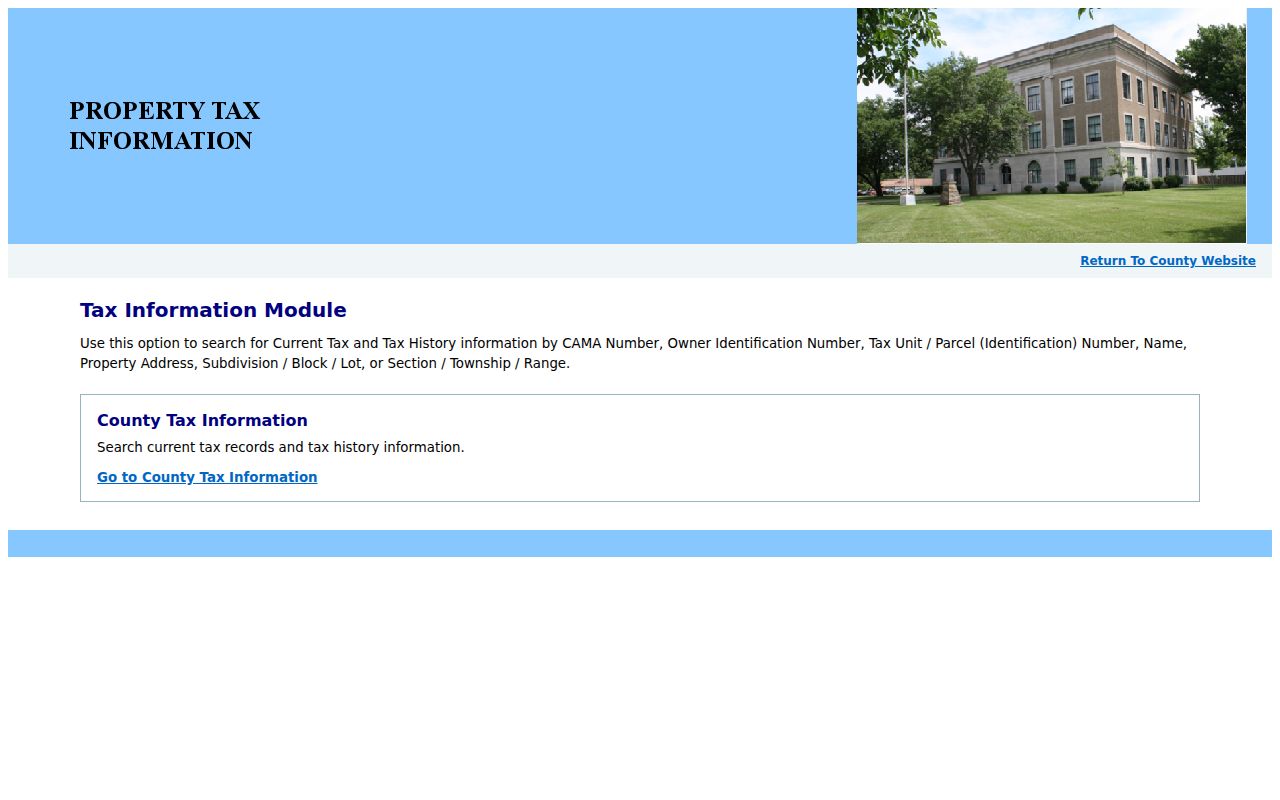
This screen gathers several parcel and land-description search routes in one place before any tax account opens.
Kansas Ratios Change Osage Taxes
Kansas uses more than one assessment ratio. The Department of Revenue sets 11.5 percent for residential property. It sets 25 percent for commercial real property. Vacant lots are assessed at 12 percent. Agricultural land gets special treatment. It is appraised by use and productivity rather than market value. It is then assessed at 30 percent of that use value. Agricultural improvements generally carry 25 percent, while a farm residence falls under the residential ratio.
The formula itself is simple. Multiply appraised value by the assessment ratio. Then multiply by the mill levy, and divide by 1,000. Classification matters as much as the headline appraisal. A parcel mixing a home, farm improvements, and agricultural land is common. It can carry figures built from entirely different rules.
Osage Agricultural Values Differ
Rural searches need one discipline: keep use value apart from likely sale value. Soil, productivity, acreage, and agricultural classification drive the statutory tax method. A deed consideration, an appraisal estimate, and the agricultural use figure can all be correct at once. Each serves its own purpose. Comparing them as one measure invites error. The Appraiser search supports acreage, class, value ranges, and section-township-range. Those fields help find a tract with no strong street address. Once located, match its legal description and parcel key to the Treasurer's account. Read the tax history after that.
Look Up an Osage Tax Bill
The Osage Tax Information Module handles current and history searches online. It accepts several modes: CAMA, owner ID, parcel, name, address, subdivision, and section-township-range. Start with the parcel number when you have it. That number avoids same-name mixups. It links the bill back to the appraisal record.
- Find the parcel in the Appraiser search and copy its exact key.
- Select the current or history mode in the tax module.
- Match the owner, legal description, year, and parcel before relying on the bill.
- Read posted payment and delinquency information for that tax year.
- Contact the Treasurer when a payment, balance, or sale status needs confirmation.
- Assessed value
- The taxable value after the class ratio is applied.
- Mill levy
- The rate applied per thousand dollars of assessed value.
- Payment under protest
- A Kansas route for contesting value while paying the tax.
- Tax lien
- The county's claim arising from unpaid property tax.
Osage Tax Dates and Delinquency
Mark two dates. Osage County sets the first half of real estate tax due December 20. The second half is due May 10. Miss the first-half deadline and the full amount, plus interest, comes due before May 10. Interest and posted payments shift over time, so confirm the current balance with the Treasurer.
Delinquency has consequences. Real estate tax more than three years delinquent can be referred for foreclosure. It may then go to public auction. Notice runs three consecutive weeks in August. The county also requires advance bidder registration. It demands cash or a certified check within one hour of sale. Court confirmation follows, and a sheriff's deed is generally filed within 30 to 45 days. Before trusting any sale status, check the notice, the court case, and the confirmation. Also verify the recorded deed yourself.
Tax Sale Records Cross Offices
No single screen tells the whole tax-sale story. The Treasurer administers collection and publishes sale information. The District Court file holds foreclosure and confirmation events. The Register of Deeds records the eventual sheriff's deed. Newspaper publication gives dated notice, yet it replaces neither the case nor the instrument. The county notes that confirmation extinguishes many liens, though covenants, restrictions, and easements survive, and a federal lien can open a 120-day redemption window. Get the actual case record and deed rather than inferring clear title from the tax module.
Osage Tax Records Need Context
Timing explains many discrepancies. The Appraiser portal refreshes on Tuesday. The tax source may draw on a prior assessed value, so an owner name or value can differ between two official screens. Save any result with its year and retrieval date.
When online access fails, the Treasurer's office sits at 717 Topeka Avenue in Lyndon. Hours are 8 a.m. to 4:30 p.m. Bring the parcel key, owner name, situs or legal description, and the year in question. A focused Kansas Open Records Act request can seek an existing notice or record not supplied through normal service.
Appeal an Osage Assessment
Osage County gives taxpayers two ways to challenge an appraisal. The county appeal page outlines both. One route is an informal appeal. It must be requested within 30 days of the valuation notice. The other is paying taxes under protest. An informal outcome can still feel wrong. Kansas law then offers more review through the Small Claims Division or the Board of Tax Appeals. Which step is open depends on where the cycle stands. Rely on the current notice and county forms.
Build the case around the parcel and its valuation date. Look hard at classification and acreage. Check land and building details too. Weigh use-value treatment and comparable sales data that speak to the appraisal. A recent sale can support the argument. It never controls the assessed figure by itself. Keep copies of everything. Save the notice, the parcel card, your evidence, the filing, and the final decision.
Appeal window. The informal Osage County valuation appeal is due within 30 days of the notice. Confirm the deadline printed on the current notice.
Verify Osage Property Tax Records
Good habits make Osage County property tax records trustworthy. Save the parcel number, the tax year, the retrieval date, and the official source. Match the legal description across appraisal records and tax records. If ownership is the real question, pull the latest recorded deed. A name on a tax bill is not proof of title.
Access under the Kansas Open Records Act has limits. Some records carry actual-cost fees, and lawful exemptions can apply. K.S.A. 45-230 also bars using public name and address lists to sell property or services. Put property tax records to sound uses: tax review, purchase diligence, estate work, and civic oversight. Never use them to target or harass anyone.